For ambitious entrepreneurs itching to bring a big idea to life, taking the time to strategically map out a path can be the difference between a startup that fizzles quickly and one that makes it for the long haul.
Mike Buckovich’s own entrepreneurial experiences have left him with a pretty good idea of how startups succeed, and he works every day to position entrepreneurs right here in Winston-Salem for long-term wins–both locally and beyond.
Buckovich is executive director and founder of Vision to Venture, a nonprofit located in the Innovation Quarter that helps entrepreneurs by strengthening the community that supports them. He has spent years interacting with startups and startup ecosystems and has found three crucial strategies that fuel how idea- and early-stage businesses succeed, starting with a few very important questions that entrepreneurs and investors alike often leave unanswered.
The Entrepreneur Behind the Startup Advice

Mike Buckovich spent 10 years working as a startup consultant and researcher in the Mid-Atlantic, from New York to Atlanta, but the advice he provides to entrepreneurs comes from a deeply personal place.
Buckovich fell into business ownership when the founders of an advertising agency he was working for unexpectedly asked if he wanted to buy the agency. He took the leap into ownership and ended up running two agencies, which positioned him to not only understand how businesses operate, but also, due to the nature of ad work, the art of vetting ideas in the marketplace.
In the course of running those two businesses, Buckovich learned how to build a startup, from idea stage to exit, when he developed two digital applications, both of which he sold after growing them into successful companies.
“I was walking the path of entrepreneurship hands-on, and I had a lot I could share with others so they could make better decisions and not repeat similar mistakes,” Buckovich says. “What years of education may not teach you, one year of running your own business will.”
From his firsthand experience as an entrepreneur, Buckovich was happy to share what he knew about how startups and businesses succeed. He jumped into the consulting space, advising investors who wanted to back startups, as well as large, established businesses such as Hanesbrands, Wells Fargo, and Lowe’s Home Improvement.
One of his consulting engagements put a local Winston-Salem venture fund that worked with new entrepreneurs and startups on his radar. They asked him to become a mentor to their clients. Because Buckovich knew his experience advising investors would be valuable to budding entrepreneurs and he appreciated his own experience being mentored during his entrepreneurial days, Buckovich felt compelled to sign on for the role.

But before fully committing to that new mentorship role he wanted to dive in and understand the problem they were trying to solve. In this case, he felt it was important to get a broader sense of what helps (and what hinders) the entrepreneurial process within a startup ecosystem—a community of people and organizations dedicated to growing small businesses and innovators of all kinds.
He wanted to use research to pour back into the Winston-Salem entrepreneurial community specifically, making the city poised to strategically support startups and idea-stage founders. So, he packed his bags and set off on a road trip…so to speak.
Three Strategies for How Startups Succeed
Starting in 2017, Buckovich began peeking under the hood of 34 different cities in the U.S., choosing places with high densities of both entrepreneurs and investor groups, to learn from their startup ecosystems.
He observed what kinds of startups were in progress, what support the city was giving those startups, and how startups were succeeding—or struggling—in each market. During his time in those places, Buckovich saw a few patterns emerge, and he brought those back home to Winston-Salem to share with entrepreneurs both here and throughout the state of North Carolina.

The result? Buckovich is better equipped than ever before to guide entrepreneurs as they venture into the world of startups. Here are three insights Buckovich wants Winston-Salem entrepreneurs to take to heart:
Strategy #1: Don’t Skip the Fundamentals
For entrepreneurs, a great idea is key. Sharing that “thing” with the world—whether it’s a digital solution, a physical retail space or a new product-–lights them up.

While a great idea is obviously an important aspect of how startups succeed, if it overshadows a few vital questions, success may never be realized:
- Who is this product/service/offering for?
- What problem is this solving for potential customers?
- How are customers/clients/users solving that problem now?
The reality is, many entrepreneurs and investors let the bright, shiny idea drive the start of a business, and that misstep is one Buckovich has seen again and again, both in his own experience and in his research of startup markets.
“There are lots of organizations that can help you get money and then build a minimal viable product, but that often happens prior to doing customer discovery, customer journeys, idea validation, all of those fundamental types of disciplines,” Buckovich says.
Many entrepreneurs either miss completely or rush through answering the question of whether their product solves a real problem. If a product or service hits the market, but doesn’t meet a consumer or marketplace need, all the investment leading up to it could be wasted.
“If you took $100,000 from someone and they’re expecting a return, it can be difficult to achieve that if you haven’t fully validated the idea and competitive landscape,” Buckovich says.
Unfortunately, funding that arrives at the wrong stage may come with unreasonable or unrealistic expectations that can be a hindrance to a startup’s growth.

“Helping people validate their idea should be the first step,” Buckovich says. “Before I give you any money, do you actually solve a problem? Do you actually have a solution? Answering these questions better helps prepare startups for investment funding and for success long term.”
A trend Buckovich saw in his 34-city tour was a rush to find funding for a startup. It wasn’t just happening in other cities—it was also happening right here in Winston-Salem, and other leaders in the city’s startup space saw the gap as well. Together, these leaders are building an entrepreneurial ecosystem that prioritizes ideation and validation over a funding-first cycle—positioning Winston-Salem, more than ever, as an ideal place for startups to succeed.
Strategy #2: It’s All About Relationships
Just as true in business as it is in life, relationships and connections are at the heart of how startups succeed. When entrepreneurs tap into the entrepreneurial support ecosystem that exists locally, they surround themselves with resources that bolster their growth and confidence along the way.

Cities feel invigorated by the promise of startup success in their communities, and they tend to put resources in place to support the development of those startups and the people behind them. Being connected to these people and organizations can play a role in how startups succeed by surrounding an entrepreneur with a strong team of mentors and other key players.
Relationships in the startup space help an entrepreneur discover the resources they may need, like networking, early marketing support, advice on how to scale an idea, or help answering those fundamental questions. Relationships can also be the difference between an entrepreneur feeling motivated, supported, and assured versus lonely, isolated, and hesitant.

Entrepreneurs in Winston-Salem are in luck when it comes to this piece of the puzzle, because they have access not just to economic development resources, startup-centric vehicles, and fellow startup founders through a plethora of programming offered across various organizations, but they can also tap into Vision to Venture, which acts as connective tissue between all those entities.
“Once we have your idea validated, we can say, ‘Let me connect you with this organization or this person in the ecosystem’–whatever is the next best step for them,” Buckovich says.
Through organizations like Vision to Venture and others, entrepreneurs and innovators have the consummate wingperson and with it the opportunity to build the relationship with the right people at the right time.
Strategy #3: Get Clear On How To Measure Success
Determining whether a startup is successful or not seems like it should be simple. Is the company making steady gains and adjusting as needed? Are there buyers for their product or service? Is the perceived success sustainable?
However, how to measure a startup’s growth is something key players in the business need to agree on at the beginning so that they’re all in alignment. Buckovich’s research showed him how things can go awry when this alignment doesn’t happen in idea- and early-stage development.

First, an entrepreneur needs to determine which category their startup falls into:
- Is it a “main street business,” such as a restaurant or boutique that is dependent on repeat local customers?
- Or is it a “high-growth startup,” one that can scale beyond a single city and eventually be sold at a significant profit, such as a digital app or consumer product?
How a startup is mentored and measured is different depending on which category they fall into. Within each category, there are variable measures of performance.
For a main street business, the first years may be focused on getting all the appropriate licenses or ensuring wages for employees are fair. In contrast, a high-growth startup may need to focus on securing funding, moving through regulatory requirements, or building visibility. Additionally, each business may have very different timelines for achieving typical measures of economic success, like how many jobs were created or profit margins.

After the first year or two, entrepreneurs or startups are often measured alongside well-established businesses or through the objectives of support organizations—and yet the yardstick for each startup is distinct. In reality, gauging a startup’s success by the wrong metrics can be the difference between whether an entrepreneur keeps going with a venture and whether they throw in the towel.
“Any community uses certain standard metrics for success,” Buckovich says. “For example, it’s important to all of us that businesses are creating new jobs, which fuels the economy and benefits everyone. However, for some startups, prioritizing job creation in the early stages would make it economically impossible to succeed. When investors, support organizations, and the larger community are clear on what success looks like in year one, two, three and beyond for a particular business, it gives that business a longer or more realistic runway to find success.”
Buckovich adds, “And this is exactly the type of culture the Winston-Salem ecosystem is working to build right now.”
For an entrepreneur or innovator, knowing what type of business they are, what is the appropriate yardstick for their startup, and how to articulate those goals to potential partners, will help them navigate obstacles and expectations.
Vision to Venture Helps Winston-Salem Know How Startups Succeed

The culmination of Buckovich’s experiences led him to start the nonprofit Vision to Venture in 2023. The goal of Vision to Venture is to help startups in Winston-Salem succeed by supporting existing organizations that back entrepreneurs, helping small businesses and startups follow the three steps that Buckovich lays out and more.
Vision to Venture supports entrepreneurs and startups in three key ways:
- Hosting entrepreneurial events that are open to the community and that foster connection and innovation in the startup ecosystem.
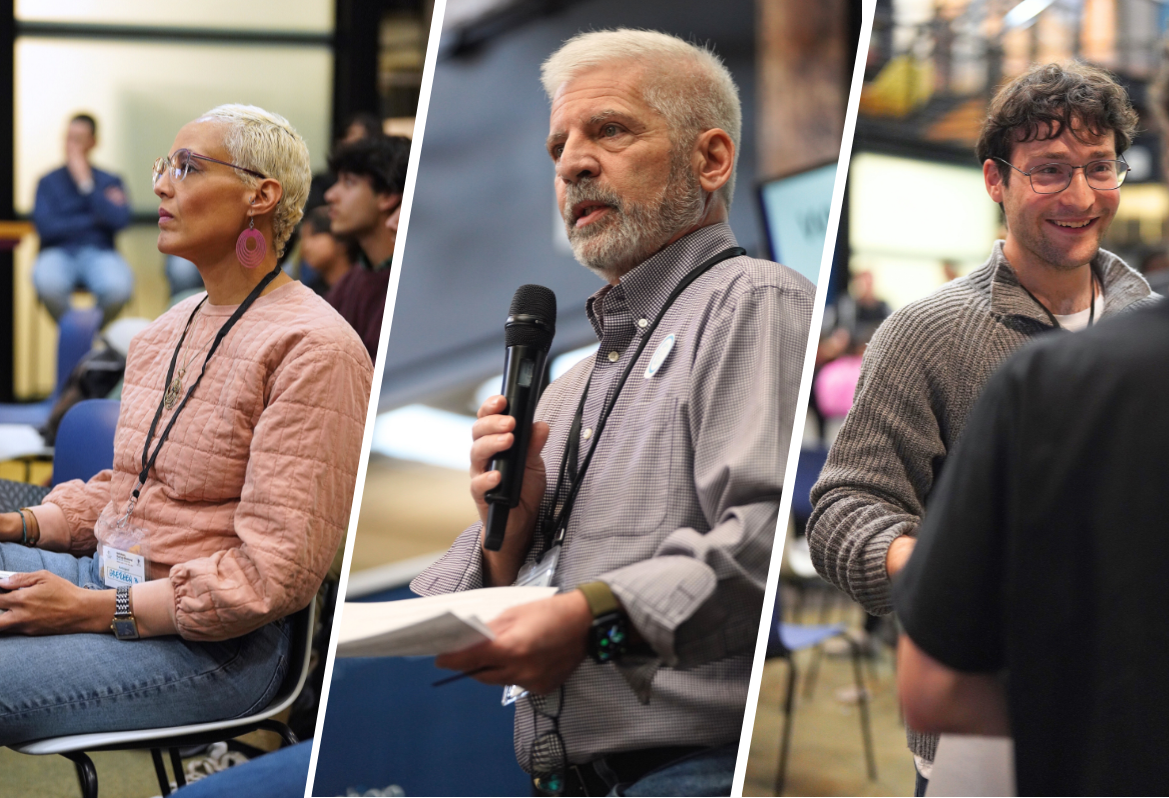
For example, for the past two years, Vision to Venture has hosted Techstars Startup Weekend, where idea-stage entrepreneurs can vet their business ideas, while also building a network of relevant connections. Vision to Venture also links arms with Winston Starts to offer ongoing programming, such as Investor Forum, International Night, and Founders Forum.
- Leading curriculum development and provide consultation to ecosystem-building organizations that support entrepreneurs and want to grow or strengthen their programs.
Thanks to Buckovich’s ongoing research, Vision to Venture has the expertise to advise on methods, programming, and other offerings within this space. In this way, Vision to Venture can fill a supportive role for ecosystem partners, rather than a competitive one.
- Providing mentorship to entrepreneurs, small businesses and startups that need direction on their next step.
Through an open door policy, Vision to Venture not only keeps a pulse on the ever-evolving needs of entrepreneurs in this community, but also helps plug startup players into the local resources that are going to best further their growth.

After all those years advising investors, Buckovich feels really good about helping the startups on the other side of that exchange.
“Instead of working for the money people evaluating startups, I’m now helping the organizations that support entrepreneurs and innovators prepare to talk to money people the right way because I know exactly what an investor or funder needs to hear, why they’re asking the question, and what they need to be sold on,” Buckovich says.
Since it exists to bolster other entities in the local entrepreneurial ecosystem, Vision to Venture has a presence at three separate locations—one in the Greater Winston-Salem Inc. office in 525@vine, one in the Winston Starts’ space at 500 West 5th Street downtown, and their most official of the bunch (the one they use as their headquarters) in the Innovation Suites, which is part of Sparq, the coworking space at Bailey Power Plant in the iQ.
Buckovich knew Vision to Venture needed a strong connection to the iQ—as a growing innovation district in downtown Winston-Salem it attracts talent, expertise, and, well, innovation from across many sectors—entrepreneurs included.
“I think Vision to Venture plays the role of a resource partner to the Innovation Quarter right now,” Buckovich says. “We help entrepreneurs feel heard, and once we know their story and goals we know how best to connect them within the broader Winston-Salem startup ecosystem, because that can be tricky for an entrepreneur to navigate on their own.”
Small(ish) City, Big Startup Energy
Winston-Salem is a small enough city that you tend to see familiar faces most everywhere you go. Its residents are known for being friendly, relationship-focused, and for cheering on others as they bring growth to the city. In a similar vein, that’s how startups are succeeding in Winston-Salem—by linking arms with insightful mentors with prudent advice, seeking out open resources, and tapping into a shared drive to foster a flourishing entrepreneurial community.

And of course, amidst it all, is Vision to Venture, working hard to provide expertise, connection, and encouragement to whoever needs it.
Learn more about Vision to Venture and how they support the startup ecosystem through events, curricula, and more. Visit the iQ website to discover the part it plays in developing the startup ecosystem of Winston-Salem.


